

The 2026 draft class is widely regarded as a super-deep group, but just two years prior, the 2024 class was labeled a historically weak one — and for good reason. So far, the top three picks from that year have not lived up to expectations. 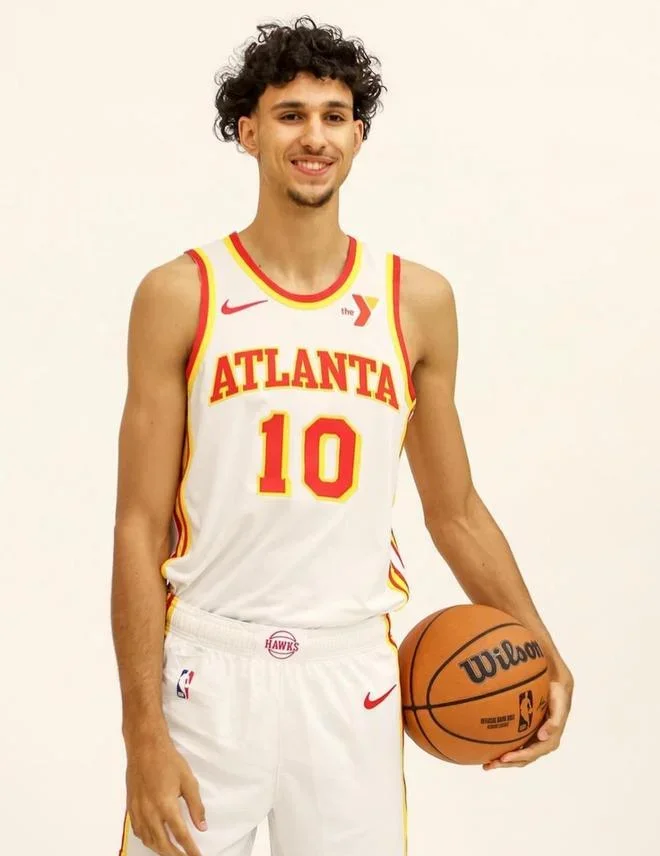
No. 1 pick Zaccharie Risacher hasn’t even cracked the regular playoff rotation this season. He lost his starting spot during the regular season, and the Hawks are reportedly unhappy with his development, with trade rumors swirling. No. 2 pick Alex Sarr has struggled with availability and lacks the shooting range and free-throw consistency expected of a franchise center. 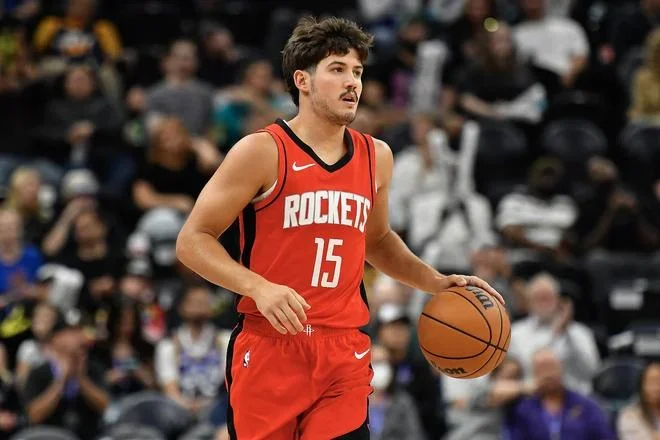
Reed Sheppard, selected third overall by the Rockets, has had an uneven start to his NBA career. He spent most of his rookie season out of the rotation. After Fred VanVleet suffered a season-ending injury last summer, Sheppard got a chance but struggled as a primary ball-handler — his passing and control were insufficient, his shooting was inconsistent, and defensively he became a constant target. He’s been dubbed “Houston’s must-eat buffet” by fans. 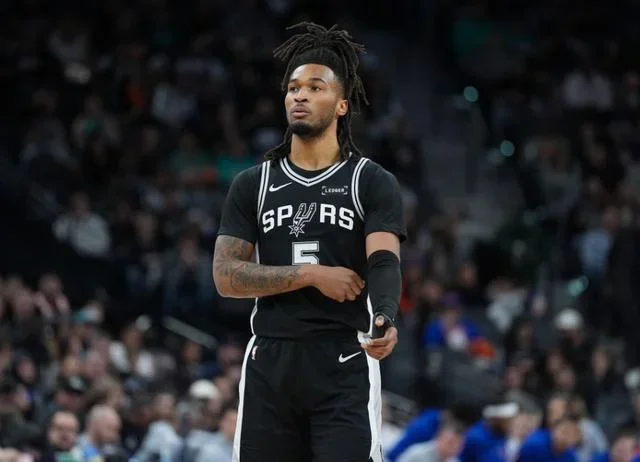
Despite the weak label, several players drafted later in the first round have outperformed the top three. Chief among them is Stephon Castle, taken fourth overall by the Spurs. As a guard, Castle has clearly separated himself from Sheppard — by a wide margin, based on playoff performances.
In nine playoff games, Castle averaged 32.6 minutes, 18.9 points, 4.3 rebounds, and 6.1 assists, shooting 44.3% from the field, 40.5% from three, and 81.8% from the free-throw line. Sheppard, in six playoff games, averaged 32.2 minutes, 12.2 points, 1.0 rebound, and 4.7 assists, with shooting splits of 30.7% and 29.6% from deep. The gap is stark.
Defensively, Sheppard is consistently targeted, forcing Houston to adjust lineups around his weaknesses alongside Alperen Şengün’s defensive limitations. Castle, by contrast, is rarely exploited. His strength and physicality allow him to switch effectively, and his awareness and on-ball defense are excellent. While Castle’s regular-season shooting was inconsistent, he has proven himself from deep in the playoffs.
Both are undersized guards, but Sheppard’s lack of physical strength undermines his good defensive instincts, whereas Castle combines instincts with toughness. At this point, Castle’s defense is miles ahead. Offensively, the numbers speak for themselves: Castle can hit threes and drive, while Sheppard has little to no one-on-one scoring ability and his shot is wildly inconsistent. In playmaking, Castle also shows more promise as a primary initiator, albeit with more turnovers. Sheppard looks more like a spot-up shooter than a lead guard, whereas Castle plays like a potential franchise centerpiece.
The Rockets have leaned heavily on Sheppard due to their lack of spacing and ball-handling, while the Spurs have other creators like Harper and Fox. Still, it’s clear that Castle and Harper hold more long-term promise than Fox in San Antonio. If Sheppard can’t fix his defensive liabilities in the coming years, he risks being phased out of the Rockets’ plans — potentially even out of the league.
Why is Castle, despite being drafted later, already the clearly better player? Sheppard is one-dimensional with glaring strengths and weaknesses, while Castle is more balanced with fewer exploitable flaws. Sheppard’s lack of physicality is a major concern, whereas Castle thrives in contact — allowing him to perform consistently in high-stakes games. Castle’s floor is significantly higher, and he is more versatile. Sheppard may have a longer development curve and a potentially higher ceiling, but whether he reaches that ceiling remains uncertain. A key factor could also be the developmental environments: the Spurs have a better track record than the Rockets in player development, which likely explains part of the current gap.
