
The WNBA is enjoying its most lucrative era yet, but for fans, keeping up with the league has become increasingly costly and complicated. Commissioner Cathy Engelbert acknowledged the issue but made it clear that pricing is largely out of the league’s hands.
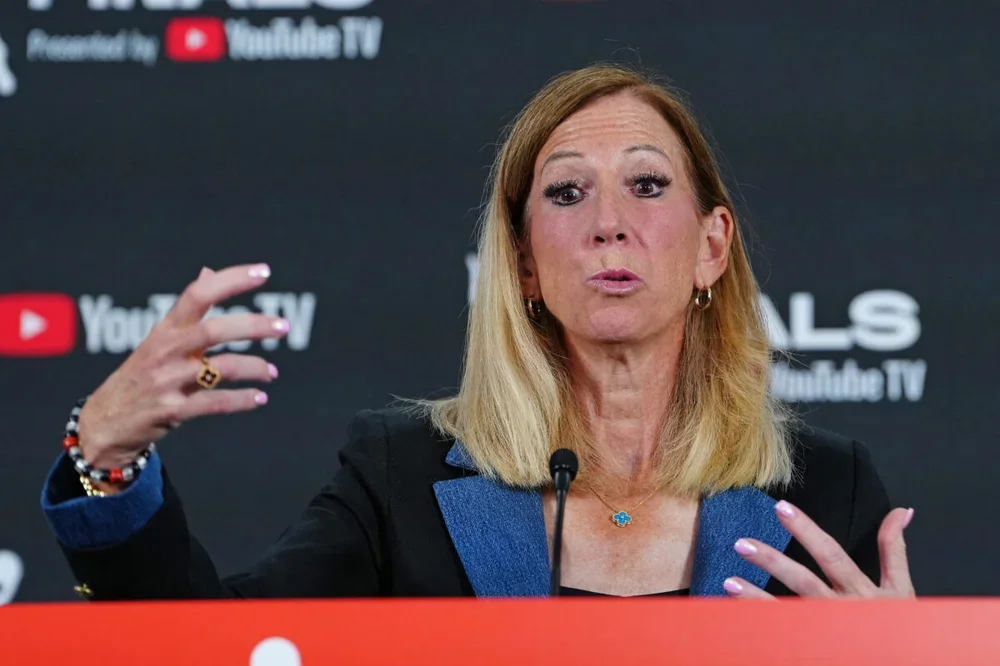
“I’m not running one of those media companies so I can’t fix the cost thing,” Engelbert said during a visit to Toronto for the expansion team’s first regular-season game. She pointed out that media companies control the pricing, describing it as “a free market” with many participants. “The WNBA is not unique in this battle,” she added.
Engelbert explained why live sports are so valuable today: “That has been accretive to live sports keeping cable alive and live sports getting streamers.” While traditional cable TV continues to lose viewers to streaming services, live sports remain one of the few formats that people still want to watch in real time. This has driven both cable networks (ESPN, ABC) and streaming platforms (Amazon, Netflix) to compete aggressively for sports rights, because sports help attract subscribers and keep audiences engaged. “It’s the one thing keeping everybody alive, quite frankly,” she said.
She also noted the upside: increased attention and revenue for the league. The WNBA’s new 11-year media rights deal, reportedly worth $3.1 billion, involves partners including Disney (ABC/ESPN), NBCUniversal (NBC/Peacock), Amazon (Prime Video), and Paramount Global (CBS). The average annual value of roughly $281 million is about 6.5 times larger than the league’s previous agreement.
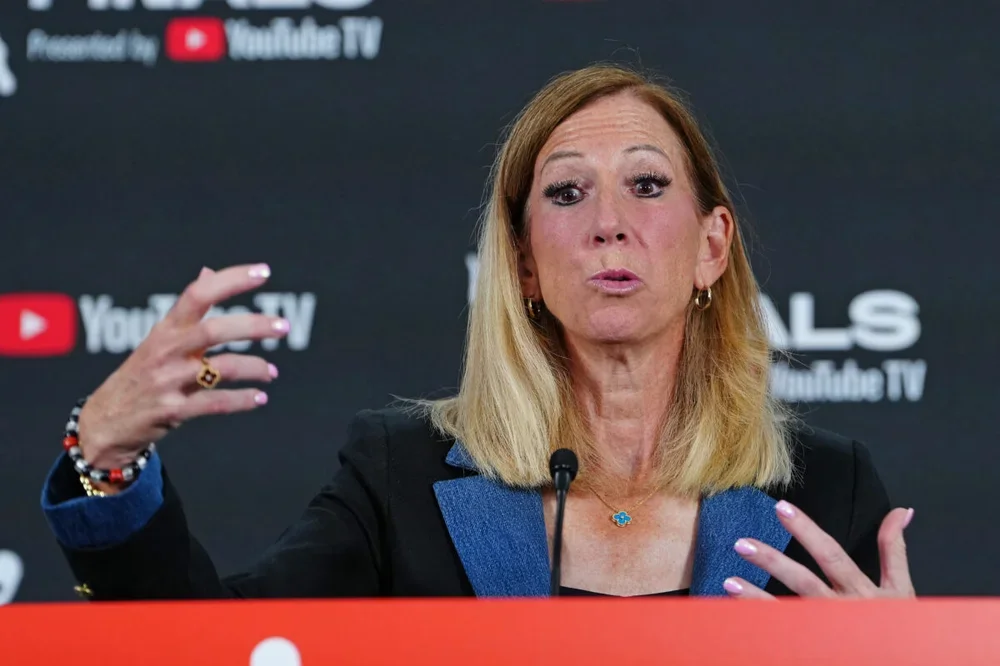
However, Engelbert acknowledged the challenge of “making sure fans can find our games when they want to.” With multiple companies owning different broadcasting rights, games are scattered across various channels and streaming apps, creating a fragmented and expensive viewing experience. She believes that consolidation is inevitable. “I do know there is going to have to be consolidation over time and you’ve already seen some of that consolidation,” she said.
She also pointed out that fans are dealing with more than just sports subscriptions—they pay for music, movies, TV apps, and other digital services. “I think I paid for 18 subscriptions and I still haven’t cut the cable cord,” Engelbert admitted.
But Engelbert defended the league’s push for wider national coverage. “Remember when I joined the league, we had 15 games on national platforms, mostly on ESPN2 and ESPNU. This year we’ll have 216 out of 330 regular-season games on national platforms. That’s over 65% broadcast nationally.” That percentage, she noted, now surpasses the NHL and MLB in terms of national visibility.
While she understands fan frustration about costs, Engelbert stressed the importance of exposure for players and the league. “I don’t disagree with the cost point. We’re outpacing the NHL and MLB on visibility as far as percentages. That was important.” She added, “I think it’s important to the players that they be shown and their stories be told.”
Engelbert highlighted how media partners have changed their approach. “When I joined the league, no one was doing any shoulder programming. Now every single broadcast partner is doing shoulder programming. They are also doing marketing of the W.” The increased national attention and media investment have been a major benefit for the WNBA, but the financial burden on fans remains a pressing question.